Speakers
Keynote Speaker
Reflections on a 43-year SRP Water Resource Management Career
Charlie Ester, recently retired, will explore his 43-year career at the very center of SRP’s water resource operations and planning. He will share a variety of humorous stories, learning events, moments of extreme anxiety, and insights learned from over 4-decades of service. This will be an entertaining stroll down Memory Lane brought to life through a series of vignettes, pictures and graphs, and recollections. A common focus throughout Charlie’s career has been on the vast forested watersheds of central Arizona which are the source waters of the Salt and Verde rivers. While Charlie’s career may have ended at the Salt River Project, other professionals continue the efforts to safeguard the forests and water supplies of Arizona.
About Charlie Ester
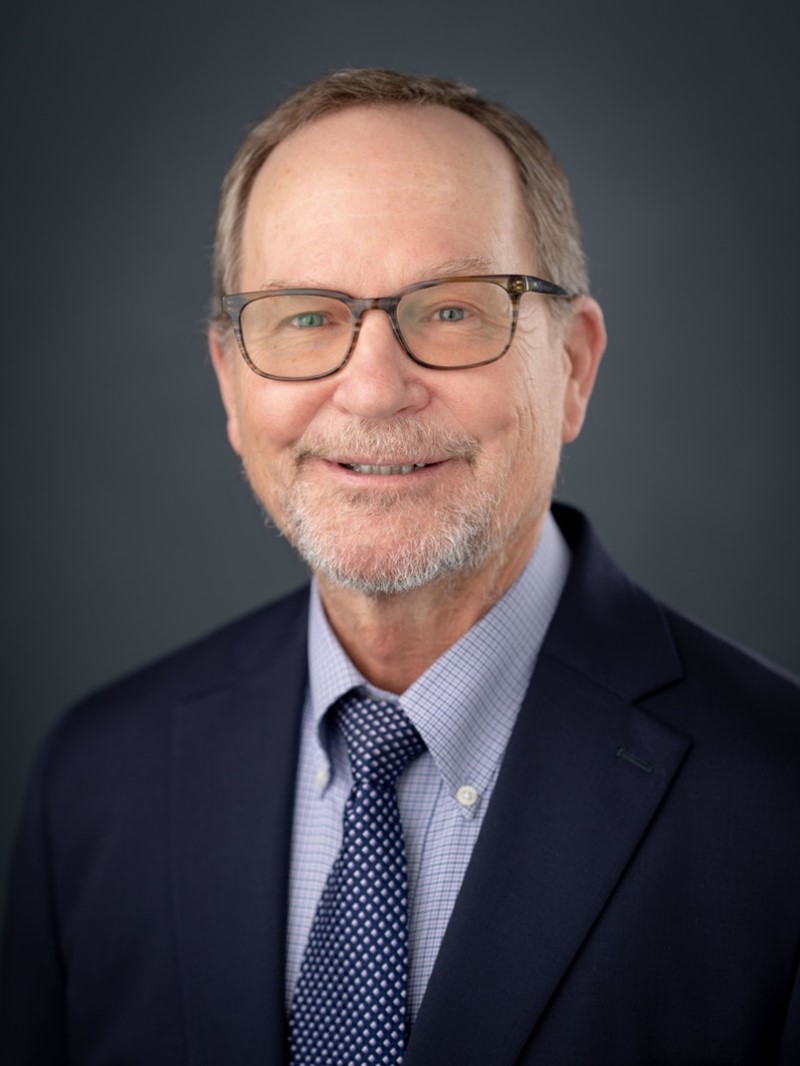
Charlie Ester retired in May as the Director of Water Supply and Planning at the Salt River Project (SRP) after a 43-year rewarding career. SRP is a water and power utility founded in 1903 which serves major portions of the Phoenix metropolitan area. The Water Supply and Planning group is ground zero for assuring a reliable and sustainable water supply to SRP’s 250,000 acre water service territory in central Maricopa County. The group is responsible for weather forecasting in support of power and water operations, watershed monitoring, water resource measurement, runoff forecasting, reservoir operations planning, flood emergency reservoir operations, drought preparedness, and data archiving and analytics. Additionally, perhaps less visible but of equal importance, the group is responsible for aquifer management, including recharge activities, within the SRP service area and maintains a system of over 270 water supply wells which augment the surface water supply during times of shortage. During Charlie’s career he served as chair of the Oak Creek Watershed Council, was a member of the Healthy Headwaters Alliance leadership team, and promoted SRP’s watershed stewardship role by expanding monitoring efforts, supporting targeted research, and engaging with the Forest Service and other collaborators on forest and watershed restoration efforts. Charlie is a 1983 Hydrology graduate of the University of Arizona.
Plenary Panel
Working towards desired conditions: 15 years of 4FRI – where are we now?
In 2010 the U.S Forest Service declared a problem: a responsibility for 2.4 million administrative acres across four forests in northern Arizona at a high risk for wildfire. With many large wildfires already devastating landscapes and communities across the region, efforts were already taking shape to understand watershed health and mitigate future destruction on public and private land. Stakeholders were eager to leverage resources and help the Forest Service develop a plan. Over the next five years, a collaborative effort evolved to restore forests ecosystems. To date, 1.53 million acres have been treated as part of 4FRI; 64% of the 2.4-million-acre goal.
Through collaboration across the Kaibab, Coconino, Apache-Sitgreaves and Tonto National Forests and input from local, county, and state governments; environmental groups, organizations, and institutions; and industry representatives, the Four Forest Restoration Initiative (4FRI) took shape. In 2015 the U.S. Forest Service made history with the signing of the 4FRI Environmental Impact Statement Record of Decision for the Coconino and Kaibab National Forests as the largest landscape-scale restoration project ever analyzed in Forest Service history. This decision approved various restoration activities on over 586,000 acres of the Coconino and Kaibab National Forests alone, including thinning; prescribed burning; watershed and road maintenance; grassland, spring, and stream channel restoration; and habitat improvements.
This panel will convene on the celebrations, successes and challenges of reaching desired conditions and goals outlined under 4FRI. Biomass bottlenecks, the importance of partnerships, and, of course, hydrology.
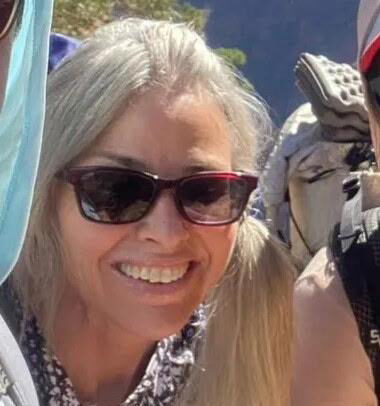
Moderator: MaryLou Zimmerman
U.S. Forest Service natural resource specialist and 4FRI monitoring coordinator, will be the moderator of this panel discussion. MaryLou will share how and why 4FRI came together, the implementation and reporting framework, and where 4FRI progress stands today. Lending decades of experience and expertise, MaryLou will provide the audience with context for the biggest challenges and successes of 4FRI through a guided perspective of these experts:
Kelly Mott Lacroix
Watershed Program Manager, Forest Hydrologist, Burned Area Emergency Response Coordinator (BAER), Tonto National Forest

Anne Mottek
Greater Flagstaff Forests Partnerships
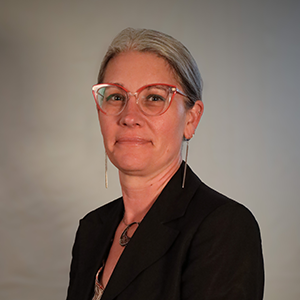
Anne Mottek is the Director of the Greater Flagstaff Forests Partnership (GFFP), since 2015, and principal of Mottek Consulting. Ms. Mottek’s educational background is in both forestry (BS) and sociology with a research emphasis (MA). Her work focuses on social science research and its application in a wide range of forestry and environmentally based land management issues and has authored several related publications and white papers. Ms. Mottek has worked on projects, publications and received grants with a variety of organizations like the Ecological Restoration Institute, Northern Arizona University (NAU) School of Forestry, University of Arizona (UA) Cooperative Extension, Southwest Fire Science Consortium, National Forest Foundation, Salt River Project, US Forest Service, Coconino County, and City of Flagstaff.
The GFFP is a longstanding non-profit organization that began 30 years agio in 1996 when relatively large fires ignited near the community of Flagstaff. The GFFP’s vision is to research and demonstrate the various approaches to forest ecosystem restoration in the ponderosa pine forest and to improve the overall sustainability and resiliency of the forests throughout Northern Arizona. GFFP’s main focus is on 1) multi-agency planning and coordinated and complimentaryimplementation of forest restoration projects, 2) monitoring and adaptive management, 3) utilization of woody biomass, and 4) outreach and education.
Fulfilling this vision and ensuring GFFP’s sustainability as a viable collaborative group is a priority for Ms. Mottek. She is also actively engaged in several collaborative organizations like the Forest Biomass Coalition (a working group under GFFP), Four Forest Restoration Initiative (4FRI) Stakeholder Group, Flagstaff Watershed Protection Project (FWPP), and Fire Adapted Communities Learning Network (FAC Net).
Devon Suarez
President, Suarez Forestry, LLC; challenges within the timber and biomass space
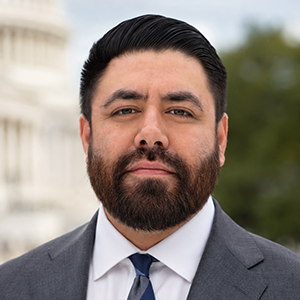
Devon is the managing partner and president of Suarez Forestry, LLC, an Arizona-based logging and forest-restoration company specializing in fuels reduction, ecological thinning, and sustainable timber harvesting. He grew up on Arizona’s Mogollon Rim in a family that has worked in the forest-products industry for four generations, giving him a lifelong connection to the forests and watersheds that sustain the state’s communities. Devon holds a Juris Doctor and combines this background with practical experience managing complex forest-restoration projects that reduce wildfire risk and protect critical water supplies. He is also an active industry advocate, working to advance sustainable forest management, strengthen rural economies, and ensure logging contractors have a voice in forestry policy.
Lunch Speaker
Our Thursday lunch speaker will be discussing:
Thirty Days Below the Rim: A Grand Canyon Whitewater Rafting Adventure
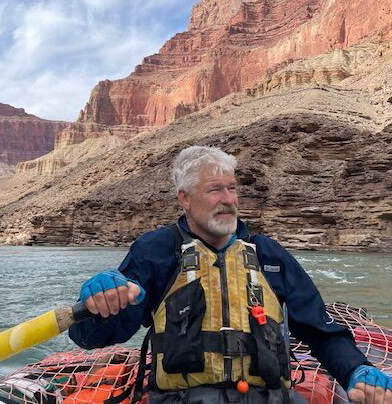
Thirty Days Below the Rim is Arizona author Jon Fuller’s sixth book. Written in the style of a daily trip log and based on Jon’s journals from his own nine Grand Canyon trips, Jon’s talk will describe exactly what’s it’s like to row your own raft through Grand Canyon. The author joins a crew of fourteen adventurers on a month-long whitewater rafting trip. Both poignant and humorous, the story describes the rapids, the wilderness, and the unique characters he encounters along the way. On a deeper level, the journey is a quest for peace in a world mired in political and social turmoil. If a Grand Canyon rafting trip is on your bucket list, this talk and book is for you.
Jon Fuller
Founder of JE Fuller/ Hydrology & Geomorphology, Inc
Jon Fuller is the Founder of JE Fuller/ Hydrology & Geomorphology, Inc. His specialties include applied fluvial geomorphology, sediment transport, erosion hazard analysis, alluvial fan flooding, and arid land hydrology. Jon earned a B.S. in Geology from Calvin College and a M.S. in Geomorphology from the University of Arizona. He is a Registered Engineer (Civil), and Professional Geologist. After a 44-year career, Jon is (almost) retired, and now spends most of his time long-distance hiking, whitewater rafting, biking, and writing about rivers and Arizona history.
Friday Breakfast Panel
Water and Data Centers, an Arizona Perspective
Moderator: Sarah Porter
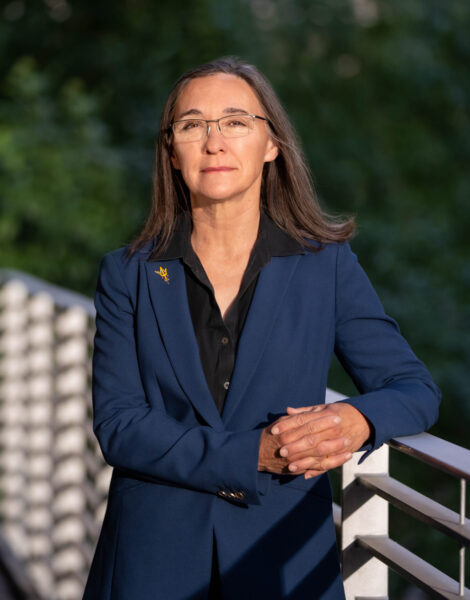
Sarah Porter is Director of the Kyl Center for Water Policy at Arizona State University’s Morrison Institute for Public Policy and Professor of Practice in ASU’s College of Global Futures. Established in 2014, the Kyl Center promotes research, analysis, collaboration and open dialogue to build consensus in support of sound water stewardship solutions for Arizona and the West. The Kyl Center’s cornerstone project is the award-winning Arizona Water Blueprint, a comprehensive online hub of information about Arizona water resources and policy.
Sarah came to the Kyl Center from the National Audubon Society, where she served as the Arizona state Director and led Audubon’s Western Rivers Project, a multistate initiative to protect and restore important river habitats in the Intermountain West. Sarah was also a key team member in the effort to launch the Nina Mason Pulliam Rio Salado Audubon Center, a nature education center located in a restored riparian habitat in South Phoenix. Before joining the staff of Audubon in 2006, Sarah spent fourteen years as an attorney in private practice, specializing in complex commercial litigation.
Sarah serves on Governor Hobbs’s Water Policy Council, University of Arizona’s Water Resources Research Center’s External Advisory Council, Phoenix’s Environmental Quality and Sustainability Commission and other community boards. In 2023, Sarah was named to the Arizona Capitol Times Powerlist as an “Unsung Hero” in recognition of her work on Arizona water policy.
A native of Phoenix, Sarah received her bachelor’s degree with honors from Harvard College and her J.D. magna cum laude from Arizona State University College of Law, where she was a John S. Armstrong Award recipient. She clerked for Hon. William C. Canby, Ninth Circuit Court of Appeals.

Scott Miller
Scott Miller is a Water Resource Analyst in APS’s Water Resource Management section where he works with permitting, water rights and strategies, regulatory issues, water policy and data analysis to ensure APS power plants have the water supplies they need to generate power. He has been with APS for 12 years. Prior to that he spent 16 years at the Arizona Department of Water Resources where he was the Well Permitting Section Manager, Assured Water Supply Manager, Phoenix AMA Director, Statewide AMA Director and the Colorado River Management Manager. Scott obtained his BA in Environmental Management at the University of Iowa.
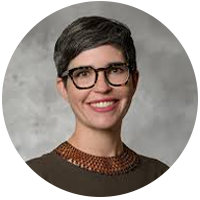
Kerri Hickenbottom
Kerri Hickenbottom is an Associate Professor in the Department of Chemical & Environmental Engineering at the University of Arizona. Her pioneering research focuses on advancing integrated systems to transform the management of water, energy. She has emerged as a preeminent leader in water resiliency for arid communities and a specialist in the critical field of data center water-energy management. Dr. Hickenbottom actively advances the field of desalination and water reuse by translating fundamental laboratory science into large-scale demonstration testbeds. Most notably, she led a first-of-its-kind study on integrated solar-energy capture desalination systems to realize self-sustained zero-waste discharge of concentrate streams in both inland and off-grid applications. Dr. Hickenbottom’s timely research on data centers addresses one of today’s grand engineering challenges: managing the rapid growth of cloud computing while minimizing global resource consumption. Leading diverse, multi-agency research projects that bridge industry, non-profits, and public utilities, her research group identifies impactful water-energy tradeoffs designed to reduce the environmental footprint of data centers in water-stressed regions. To further support these efforts, her team developed the open-source decision support tool, DC E-WISE, which aids stakeholders in understanding complex water-energy tradeoffs and opportunities for onsite water reuse. Dr. Hickenbottom utilizes these research tools and testbeds as platforms for workforce development, training the next generation of engineers to solve complex problems at the water-energy nexus while promoting social and environmental equity through enhanced system efficiency.